IFR Predicts Exponential AI Robotics Shift; GE Aerospace Pilots $300M AI Hub
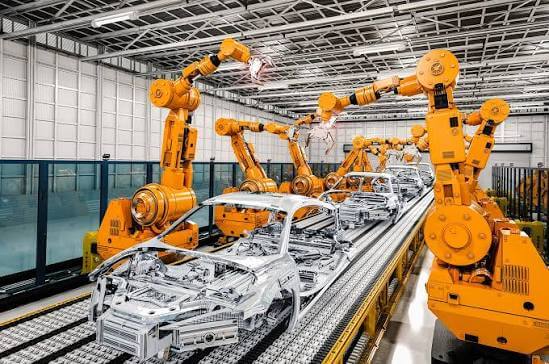
The fundamental driving force pushing corporate procurement teams to adopt intelligent software-defined machinery is economic return. The IFR notes that AI-embedded robotic platforms deliver a much faster Return on Investment (ROI) compared to non-intelligent automation setups. By continuously analyzing machine tool wear patterns, thermal variations, and environmental dynamics, localized neural networks significantly lower unexpected equipment breakdowns and eliminate costly processing errors. This proactive optimization framework is essential for high-skill production sectors—including automotive assembly, pharmaceutical processing, and advanced electronics fabrication—where finding highly specialized technicians is increasingly difficult amid a shrinking global talent pool.
GE Aerospace $300M Singapore Expansion Highlights
- Strategic Infrastructure Hub: Singapore Engine Component Repair Center.
- Digital Innovation Foundation: AI Center of Excellence underpinned by a unified data fabric.
- Core Operational Focus: CFM LEAP-1A/1B High-Pressure Turbine (HPT) module repair.
- Performance Metrics Anchor: FLIGHT DECK fundamentals optimizing SQDC (Safety, Quality, Delivery, Cost).
GE Aerospace Channels $300M into Next-Gen Singapore Repair Hubs
The real-world implementation of the IFR's predictive models is clearly demonstrated by GE Aerospace’s massive $300 million investment plan in Singapore. Designed to establish a Premier Service Center for the Asia-Pacific region, this multi-year initiative upgrades legacy Maintenance, Repair, and Overhaul (MRO) workflows through a high-tech data fabric network. By deploying advanced automated digital inspections and predictive analytics directly onto its active floor, the company can accurately forecast the precise duration and cost of complex engine refits. This structural overhaul applies GE's core "FLIGHT DECK" principles to raise safety, quality, and delivery metrics for international commercial airlines.
Upgrading Materials Processing with High-Precision Autonomous Interlocks
Beyond software-defined predictive mapping, GE (Note: This link directs to a comprehensive catalog of premium industrial automation products) Aerospace's Singapore expansion brings advanced automation directly to complex chemical metallurgy and coating processes. The multi-million-dollar investment fund covers the building of an advanced facility dedicated to REACH-compliant (Registration, Evaluation, and Authorization of Chemicals) anti-corrosion coatings. Applying these chemical barriers to high-pressure turbine components requires precise temperature control and uniform thickness mapping. By handing these delicate tasks to vision-guided, AI-driven robotic cells, GE Aerospace ensures absolute processing uniformity, completely isolates human operators from toxic chemical environments, and lengthens the flight lifespan of modern aviation engines.
Industry Commentary: The Convergence of Edge Control and Physical Intelligence
The transition highlighted by the IFR indicates a major structural shift within the global industrial marketplace. Traditional machine platforms are rapidly moving away from isolated, static hardware blocks, evolving instead into dynamic, software-defined assets. In my view, companies that successfully embed machine learning directly into the physical control layer will establish an unassailable competitive advantage. By pairing real-world operational data with virtual training models, advanced enterprises become highly efficient software compounders. This integrated approach shields heavy industry from volatile market conditions, protects corporate margins, and elevates traditional factory automation into an autonomous, self-optimizing engine of industrial growth.
Application Scenarios for AI-Driven Industrial Robotics
- Autonomous Vision-Guided Airfoil Blending: Utilizing robotic arms with integrated AI vision tracking to scan and grind worn turbine blades back to precise aerodynamic profiles automatically.
- Predictive Asset Mapping in Cleanrooms: Connecting semiconductor control systems with edge machine learning to monitor microscopic fan-filter unit vibrations, preventing wafer contamination.
- Dynamic Piece-Picking in Logistics: Deploying Physical AI-powered robotic pickers to identify, grasp, and sort thousands of uniquely shaped consumer goods under changing lighting conditions.
- Real-Time Weld Defect Detection: Running high-speed neural networks directly inside automated automotive assembly lines to verify structural spot welds instantly, channeling telemetry straight into core plant data networks.


