AI Factory Automation: Rockwell Architecture Redefines ROI
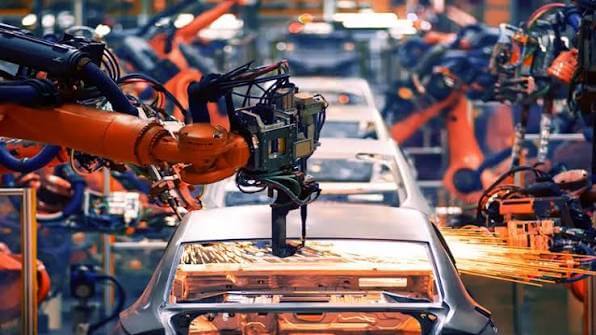
The lightning-fast acceleration of machine vision, Industrial IoT (IIoT), digital twins, and artificial intelligence fundamentally alters global manufacturing. Traditional, static production setups struggle to meet modern requirements for rapid, high-mix component flexibility. Consequently, competitive enterprises are abandoning rigid assembly frameworks in favor of highly autonomous, decentralized plant environments. This technological shift allows operators to transition toward "dark factories" requiring minimal physical supervision.
Overcoming the Integration Dilemma in Modern Factory Automation
Adopting next-generation software layers presents a serious strategic challenge for typical plant engineering teams. Integrating complex sensory networks remains highly expensive, mathematically complex, and carries significant risk of unplanned downtime. Therefore, manufacturers realize that assembling independent components piecemeal erodes long-term hardware reliability. Pure-play suppliers capable of delivering unified, cross-compatible hardware and software ecosystems hold a distinct competitive edge.
Empowering Edge Computing via Enterprise PLC and DCS Ecosystems
Wisconsin-based Rockwell Automation stands at the forefront of this industrial digitalization movement by combining field hardware with analytical software. The company builds robust industrial automation (Note: This refers to a comprehensive catalog of premium industrial automation products) portfolios anchored by their signature Allen-Bradley PLC architectures. By embedding visual programming and edge-to-cloud data transfer directly into control nodes, they enable real-time operational processing. This deep integration simplifies how distributed control systems (DCS) execute complex automation scripts across heavy industries.
Analyzing the Global Operational Footprint of a Pure-Play Titan
Rockwell scales its high-performance automation portfolios globally across heavy and light industries in over 100 countries. The enterprise manages ten primary manufacturing hubs situated strategically across North America, Europe, and Asia-Pacific. Furthermore, the organization reinvests approximately 8% of its annual revenue directly into cutting-edge research and development. This sustained focus secures over 4,900 active patents covering transistor gate sequencing, autonomous mobile robots (AMRs), and edge intelligence.
Diversifying Market Vertical Streams to Secure Long-Term Growth
Financial performance metrics demonstrate a highly stable corporate structure insulated from localized vertical downturns. The company generated $8.3 billion in annual sales during 2025 while maintaining strong mid-single-digit organic growth. Geographically, North America remains Rockwell's primary marketplace, driving 63% of overall corporate revenue streams. Moreover, its highly diversified customer base spans vital global sectors, led by food & beverage packaging and modern energy infrastructure.
Specialist Commentary: The Transition from Cyclical Hardware to Platform Ecosystems
In my experience, industrial operators who treat automation upgrades as isolated hardware purchases consistently lose margin over time. Rockwell’s true competitive moat lies in its expansive software layer, such as the Studio 5000 ecosystem, which integrates natively with its installed controller base. By shifting the manufacturing paradigm from static code to adaptive, simulated environments, they protect users from costly system obsolescence.
Advanced Smart Factory Application Scenarios
- Simulated Environment Commissioning: Utilizing digital twins to test high-speed sorting algorithms within a virtual DCS environment before physical deployment.
- Autonomous Material Logistics: Deploying fleet-managed AMRs that recalculate factory floor routes dynamically using built-in machine vision parameters.
- Cloud-Connected Edge Diagnostics: Interfacing Allen-Bradley PLC arrays with mobile cloud networks to monitor remote pump station telemetry securely.
- High-Mix Food Assembly Optimization: Using adaptive control systems to modify conveyor line indexing instantly for varying product container sizes.


