- Home
- Yokogawa ACM12 S1 CENTUM Series | Communication Modules


Sale
Yokogawa ACM12 S1 CENTUM Series | Communication Modules
No reviews
In stock!
- Part Number: ACM12 S1
- Brand: Yokogawa
- Type: Communication Module
- Dimensions: 3.3x10.7x13cm
- Country of Origin: Japan
- Barcode: 8537101190
Share
Additional Specifications
| Color / Pattern |
|
| Power Source |
|
| Communication Protocols |
|
| Controller Design |
|
Tags:
Communication Module
,
YOKOGAWA
Product Description
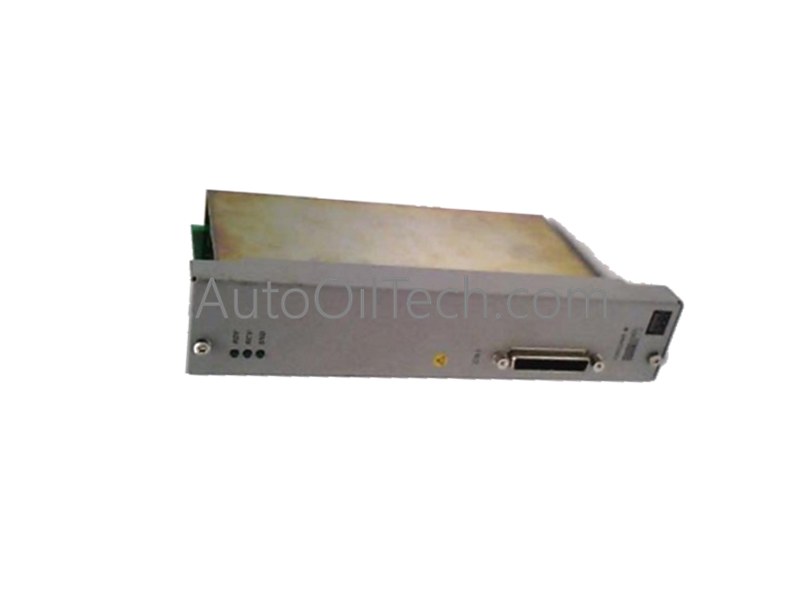
The Yokogawa ACM12 S1 serves as the primary ACM12 Communication Module utilized to execute deterministic serial data routing across integrated production control system platforms. This hardware sub-assembly establishes dedicated RS-232C physical link paths to transfer register variables, configuration profiles, and system metrics between local automation nests and external peripheral equipment.
Hardware Specifications
| Parameter | Specification |
|---|---|
| Model | ACM12 S1 (Alternative catalog string: ACM12-S1) |
| Brand | Yokogawa Electric Corporation |
| Origin | Japan |
| Weight | 1.90 lbs |
| Dimensions | Standard Yokogawa card nest footprint profile |
| Operating Temp | Standard industrial control room environment limits |
| Power Consumption | Sourced via integrated system nest backplane power lines |
| Product Type | Communication Module |
| Serial Port Configuration | RS-232C standard protocol interface |
| Physical Interface Type | Multi-pin serial connection ports |
| Status Diagnostics | Local faceplate LED indicator arrays |
| Lifecycle Status | Discontinued by manufacturer |
Process Control Instrumentation and DCS Communication
The communication module implements localized network conditioning matrices to maintain stable loop updates across separate distributed control domains. When linking data trends between field instruments—including parameters managed via the 4-20 mA HART loop protocol—and the central control architecture, the unit processes asynchronous data blocks over its RS-232C physical layer.
To prevent common-mode electrical noise propagation from distorting the digital registers, the hardware features built-in channel-to-channel isolation circuits. This decoupled topology blocks ground-loop currents originating from long, field-routed serial cabling, stabilizing data packaging routines and enforcing strict firmware data compatibility across the CENTUM net infrastructure.
Frequently Asked Questions
Q: What are the cable length and physical layout boundaries for the integrated RS-232C channel?
A: The RS-232C interface utilizes single-ended signaling paths that share a common reference ground. Because it lacks a differential electrical profile, lines must be kept inside standard engineering boundaries (typically under 15 meters / 50 feet) to prevent external electromagnetic interference from introducing bit errors into the data stream.
Q: How do the internal diagnostic LEDs assist in verifying active serial link transactions?
A: The front panel includes dedicated LED arrays that link directly to the internal transmit (Tx) and receive (Rx) lines. Rapid flashing patterns confirm continuous, high-speed data frame transmission, while a completely dark state alerts the technician to physical wire breaks, wrong pin configurations, or total hardware power loss.
Have a Question?