- Home
- GE IS210AEBIH3BEC Acoustic Emission / Bridge Interface Board


Sale
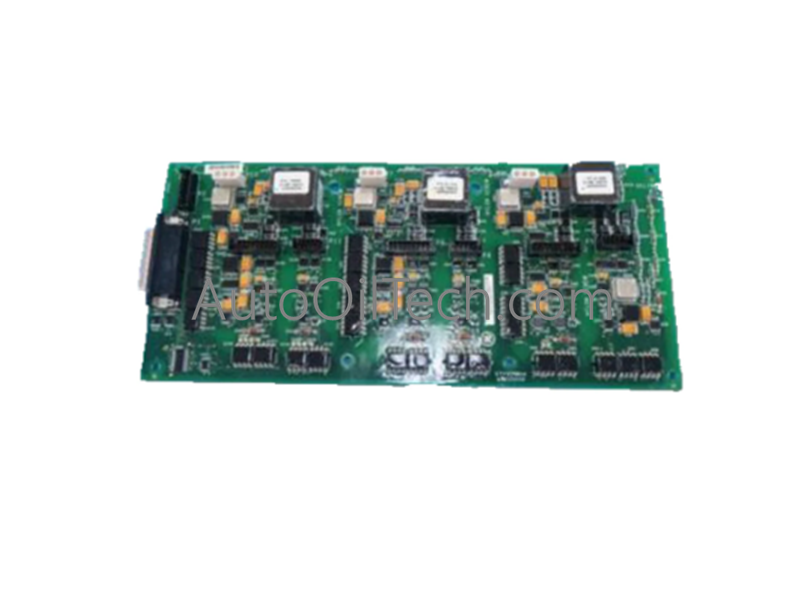
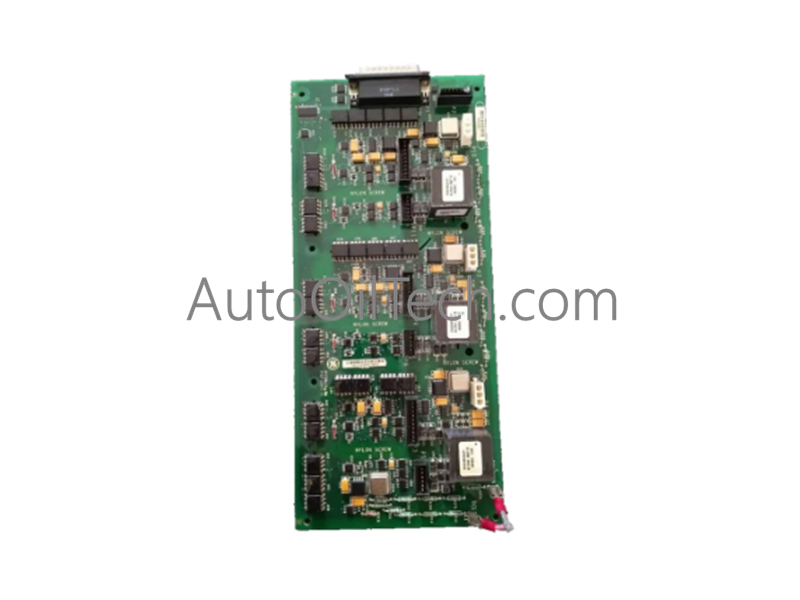
GE IS210AEBIH3BEC Acoustic Emission / Bridge Interface Board
No reviews
In stock!
- Part Number: IS210AEBIH3BEC
- Brand: General Electric
- Type: Acoustic Emission / Bridge Interface Board
- Dimensions: 19.7x10x4.5cm
- Country of Origin: USA
- Barcode: 8537101190
Share
Additional Specifications
| Color / Pattern |
|
| Power Source |
|
| Controller Design |
|
Product Description
Description
Configured for direct digital control in General Electric Mark VIe networks, the GE IS210AEBIH3BEC (IS210AEBIH3B Functional Board) provides direct physical/electrical execution. This high-reliability hardware assembly operates within the Mark VIe control platform, serving as either a high-frequency acoustic emission processing engine or a high-speed communication bridge interface card, depending on the system's architectural configuration and software provisioning.
Hardware Specifications
-
Model: IS210AEBIH3BEC
-
Brand: General Electric
-
Origin: United States
-
Weight: 1.7 kg
-
Dimensions: Standard Mark VIe internal module chassis profile
-
Operating Temp: -30 to 65 deg C
-
Functional Variant: Acoustic Emission Processing / High-Speed Bridge Interface
-
Board Revision: H3BEC (Conformal coated, advanced hardware revision matrix)
-
System Series: Mark VIe Control System
I/O Density Scaling and Deterministic Networks
The hardware architecture governs localized I/O density scaling by implementing high-bandwidth conditioning paths that process complex high-frequency signals or aggregate local data packets from adjacent field terminal boards. This synchronized telemetry data travels through Profinet / EtherNet/IP deterministic networks parameters down to the primary control processors, using high-velocity backplane bus communication velocities to maintain sub-millisecond event sequence logging while enforcing total firmware flash compatibility across the active control grid.
Frequently Asked Questions
Q: What specific engineering attributes does the "H3BEC" revision code indicate? A: The "H3BEC" designation represents an advanced hardware revision layer featuring an updated component bill of materials (BOM), factory-applied industrial conformal coating for harsh environments, and optimized trace shielding to minimize electromagnetic interference across high-speed bus paths.
Q: How do the H3 generation variants differ from earlier H1 generation AEBI boards? A: The H3 generation introduces enhanced electronic component tolerances, improved thermal dissipation characteristics across the surface-mount assembly, and broader backplane bus bandwidth capabilities to accommodate denser data frame transfers.
Field Installation Guidelines
-
Slide the board vertically into its allocated slot within the control subrack, ensuring the internal edge pins align cleanly with the backplane receptacles before applying uniform force to lock the mechanical injector handles.
-
Fasten the upper and lower faceplate retention screws to exactly 0.5 Nm to prevent mechanical displacement from local turbine platform vibrations and to establish a robust frame ground connection.
-
Route all critical high-frequency or communication lines through separate, shielded conduit runs, maintaining a minimum 300 mm spacing boundary from high-voltage power cables to avoid electromagnetic noise injection and data frame corruption.
Have a Question?