- Home
- ACM11-S2 Yokogawa Communication Module | CENTUM Series


Sale
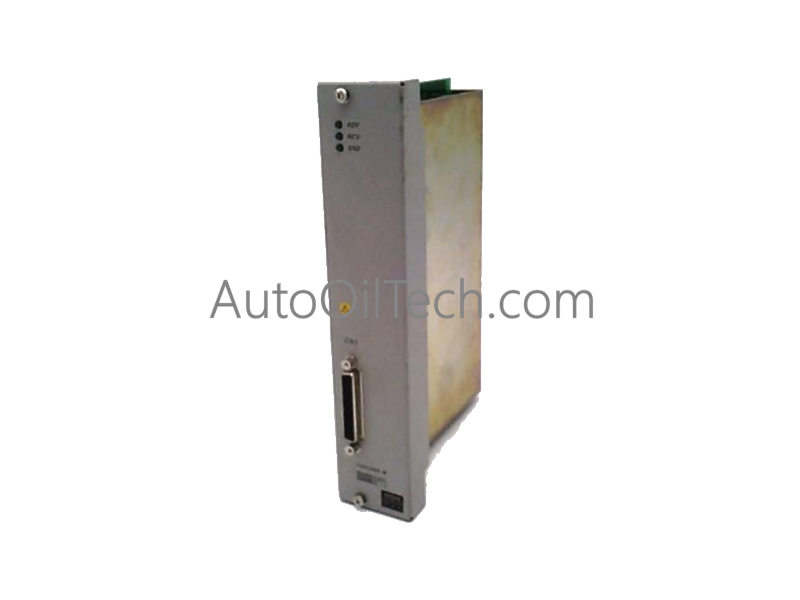
ACM11-S2 Yokogawa Communication Module | CENTUM Series
No reviews
In stock!
- Part Number: ACM11-S2
- Brand: Yokogawa
- Type: Communication Module
- Dimensions: 3.3x10.7x13cm
- Country of Origin: Japan
- Barcode: 8537101190
Share
Additional Specifications
| Color / Pattern |
|
| Power Source |
|
| Controller Design |
|
Tags:
Communication Module
,
YOKOGAWA
Product Description
Configured for serial data arbitration and network interface tasks within industrial control networks, the Yokogawa ACM11-S2 (ACM11 Communication Module) provides direct physical/electrical execution. This microprocessing hardware platform establishes dedicated RS-232C link paths to mirror register variables and diagnostic data between local node segments and external computing nodes.
Hardware Specifications
| Parameter | Specification |
|---|---|
| Model | ACM11-S2 |
| Brand | Yokogawa Electric Corporation |
| Origin | Japan |
| Weight | 1.90 lbs |
| Dimensions | Standard Yokogawa card nest footprint profile |
| Operating Temp | Standard industrial control room environment limits |
| Power Consumption | Driven via common backplane power distribution rails |
| Product Type | Communication Module |
| Serial Interface | RS-232C standard protocol line configuration |
| Physical Connection | Standard serial interface multi-pin connection ports |
| Status Indicators | Local faceplate diagnostic LED arrays |
Process Control Instrumentation and DCS Communication
The communication module implements a specialized serial transceiver core to maintain stable data velocities across legacy and contemporary control system nodes. Enforcing strict firmware flash compatibility verification across all data frames allows the hardware to stream register values over the RS-232C link without introducing communication latencies. Raw serial streams pass through internal channel-to-channel isolation circuits designed to block common-mode noise and prevent ground-loop currents from degrading active instrumentation signals. This isolated topology stabilizes data packaging routines, delivering deterministic signal translation directly to central CENTUM network matrices or external monitoring terminals.
Frequently Asked Questions
Q: What are the electrical limitations regarding the integrated RS-232C communication channel?
A: The RS-232C interface complies with standard single-ended electrical parameters, designed for point-to-point communication loops. Because it lacks differential signaling, cable distances should remain within standard engineering limits (typically 15 meters / 50 feet) to prevent noise induction and signal attenuation.
Q: How does the channel-to-channel isolation architecture safeguard the underlying system backplane?
A: The embedded galvanic isolation barriers decouple the external field-side RS-232C physical lines from the sensitive inner backplane logic. This design blocks airborne electrical surges, inductive spikes, or improper wiring faults on the serial line from propagating into the central control nests.
Have a Question?