- Home
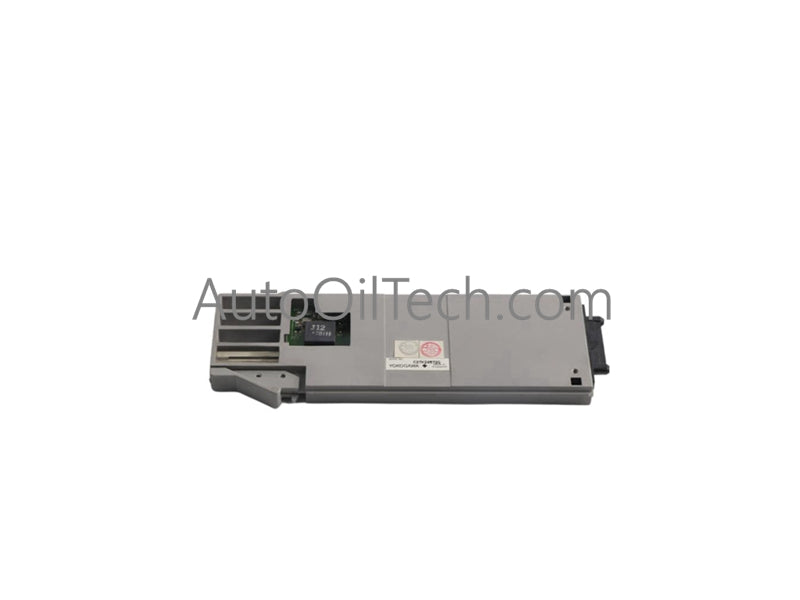
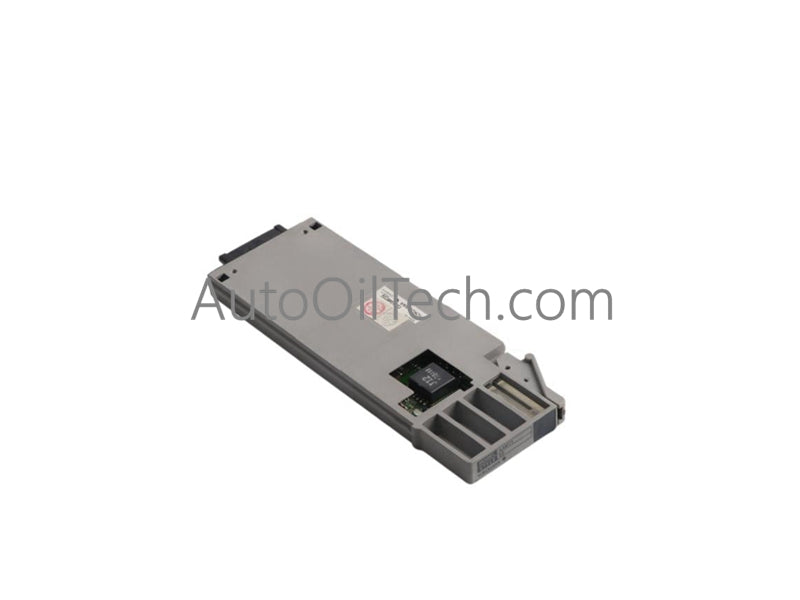
- AAM21 | Yokogawa | Input Module


Sale
AAM21 | Yokogawa | Input Module
No reviews
In stock!
- Part Number: AAM21
- Brand: Yokogawa
- Type: Current/Voltage Input Module
- Dimensions: 3.2x10.7x13cm
- Country of Origin: Japan
- Barcode: 8537101190
Share
Additional Specifications
| Color / Pattern |
|
| Power Source |
|
| Controller Design |
|
Tags:
Current/Voltage Input Module
,
DCS
Product Description
Description
The Yokogawa AAM21 functions as an Input Module designed for thermocouple signal acquisition, supporting multiple IEC and JIS standard sensor types with software‑defined input ranges.
Hardware Specifications
-
Model: AAM21
-
Brand: Yokogawa
-
Origin: Japan
-
Weight: Not specified
-
Dimensions: Not specified
-
Operating Temp: Not specified
-
Power Consumption: ≤150 mA at 5.0 V DC
-
Input Signal: JIS/IEC thermocouple types K, T, J, E, B, R, S, N
-
Input Range: -50 to 150 mV
-
Allowable Input Voltage: -0.5 to 4.0 V DC (between terminals B-C)
-
Input Resistance: 1 MΩ at power‑up (3 kΩ at power‑down)
-
Accuracy: ±20 µV
-
Data Update Period: 100 ms
-
Signal Source Resistance: ≤1000 Ω
-
RJC Input: -10 to 70 deg C
-
RJC Accuracy: ±1 deg C
-
Auxiliary Voltage Output: 1 to 5 V DC; ≤1 Ω output resistance; ≥10 kΩ load resistance; range 0.5 to 5.5 V DC
-
Burnout Detection: Selectable UP/DOWN/OFF; detection time ≤60 s; detection current 0.1 µA (terminal B only)
-
Signal Isolation: Input signals insulated between systems; withstand voltage 1500 V AC/min
-
Effect of Signal Source Resistance: 1 kΩ → conversion error ≤±20 µV
-
Effect of Ambient Change: 10 deg C → mV input ±40 µV; thermocouple input ±40 µV; RTS input ±0.16 Ω; potentiometer input ±0.4 % span; auxiliary output ±24 mV
-
Installation: AMN11 Nest for Analog I/O Modules
-
Wiring: M4 screw terminal connection
-
Input Signal Specification: Defined via software setting
Cold Junction Compensation (CJC)
The AAM21 incorporates cold junction compensation (CJC) to stabilize thermocouple measurements across varying ambient conditions. RJC input accuracy is maintained within ±1 deg C, ensuring consistent conversion of low‑level millivolt signals. Burnout detection provides selectable UP/DOWN/OFF states, enabling system‑level fault handling within 60 s.
Frequently Asked Questions (FAQ)
Q: How is burnout detection configured? A: Burnout detection can be set to UP, DOWN, or OFF via software, with detection current limited to 0.1 µA at terminal B.
Q: What is the impact of ambient temperature variation on measurement accuracy? A: A 10 deg C change results in ±40 µV drift for mV and thermocouple inputs, ±0.16 Ω for RTS inputs, and ±0.4 % span for potentiometer inputs.
Q: Can auxiliary voltage output be used for external reference devices? A: Yes, provided load resistance is ≥10 kΩ and grounding is shared with the system.
Field Installation Guidelines
-
Install the module into the AMN11 Nest for Analog I/O Modules.
-
Connect wiring to terminal blocks using M4 screws with proper torque.
-
Maintain shield grounding at a single point to prevent ground loops.
-
Separate signal wiring from high‑voltage cabling to minimize interference.
-
Configure input signal type and range via software before commissioning.
Have a Question?