GE Aerospace Drives Smart Factory Automation with $300M Investment
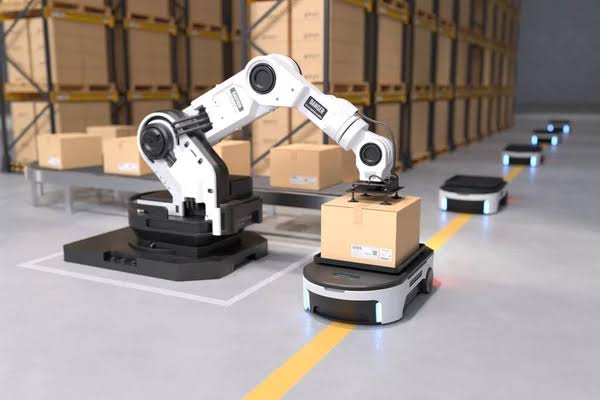
GE Aerospace recently announced a massive $300 million investment in its Singapore engine repair facility. The aerospace giant aims to scale up factory automation and digital control systems over the next five years. Consequently, this initiative will significantly boost maintenance, repair, and overhaul (MRO) efficiency across the Asia-Pacific region.
Integrating Industrial AI and Advanced Robotics
Furthermore, the upgrade introduces cutting-edge industrial AI inspection tools and specialized automated coating technologies. The company will establish an AI Center of Excellence to pioneer these advanced inspection workflows. As a result, automated systems will detect defects much faster than traditional manual inspection methods.
Enhancing Control Systems for High-Value Workflows
Modern aviation MRO demands precise process control. Therefore, GE Aerospace is deploying centralized DCS (Distributed Control Systems) and robust PLC networks to manage complex chemical processing. These control systems maintain optimal parameters for anti-corrosion treatments. Ultimately, operators gain real-time visibility into every stage of the component repair cycle.
Evaluating the Implementation Challenges for Smart Factories
However, integrating sophisticated factory automation into an active facility presents distinct execution risks. System integrators must prevent operational downtime during the legacy hardware migration phase. Moreover, global supply chain disruptions could potentially delay the procurement of critical PLC and robotics components.
Author Insight on the Future of Aerospace Automation
In my view, this investment reflects a broader industry shift toward highly data-driven smart manufacturing. Competitors like Rolls-Royce must accelerate their own industrial automation roadmaps to remain viable. For B2B stakeholders, this project proves that predictive maintenance and automated quality control are now operational necessities.
Solution Scenario: Automated NDT Inspection and Process Control
In a high-tech aerospace MRO smart factory, turbine blade inspection and refurbishment require extreme precision. The following integrated automation architecture illustrates how these technologies function together on the plant floor:
- Robotic Handling: Six-axis industrial robots safely transfer heavy engine components between chemical cleaning tanks.
- PLC Integration: High-performance PLCs coordinate the precise timing, positioning, and safety interlocks of the robotic arms.
- AI Defect Detection: Automated optical systems capture high-resolution images of the components. Then, localized AI models instantly identify micro-cracks using edge computing algorithms.
- DCS Monitoring: A Distributed Control System continuously tracks temperature, pH levels, and chemical concentrations during the subsequent anti-corrosion coating process.


